USD


Specifying Affordable waterproof cycling saddle bag accessories dropshipping for Wholesale and OEM Orders
How It Performs in Use
| Component | Failure mode in service | Specification limit | Factory check |
|---|---|---|---|
| Welded seam | Water ingress at stitch line after 20–40 km in steady rain | 0 mm leakage at 1,500 mm hydrostatic head | Seam leak test, 5 min submersion |
| Zipper track | Slider separation under mud load | 200 open-close cycles without tooth skip | Zipper cycle rig |
| Seat-post strap | Hook-and-loop shear failure under saddle bounce | 15 kg static hold, 30 mm strap width | Load fixture, 1 min hold |
| Fabric coating | Delamination after repeated machine washing | Coating retention after 10 wash cycles at 30 °C | Wash and tape adhesion check |
| Reflective trim | Peeling at fold points after UV exposure | No cracking after 100 hours UV chamber | UV exposure and flex test |
A saddle bag that leaks at the seam generates more returns than a bag that weighs an extra 20 g.
The interface between parts determines whether water stays out. Roll-top closures with a plastic buckle shed road spray better than a zipper alone because there is no stitched perforation through the main panel. Welded seams remove needle holes entirely, while sewn-and-taped seams depend on tape adhesion that can fail after heat and sweat exposure in storage.
Balance and load analysis shows that a bag positioned behind the saddle should carry no more than 0.5 kg before the seat-post strap begins to creep. Heavier loads shift the bag sideways on rough pavement and put shear load on the hook-and-loop fastener, which is the first part to let go in real use.
Assumptions Buyers Should Stop Making
Buyers often treat 'waterproof' as a single grade, so a sample that passes a garden-hose test can still leak during a multi-hour tour.
A specification card that lists a hydrostatic head does not prove the seam held after 40 km of steady rain. Private-label buyers who specify the cheapest zipper to hit a price point usually see slider separation within the first retail season, and the cost of a return exceeds the unit savings.
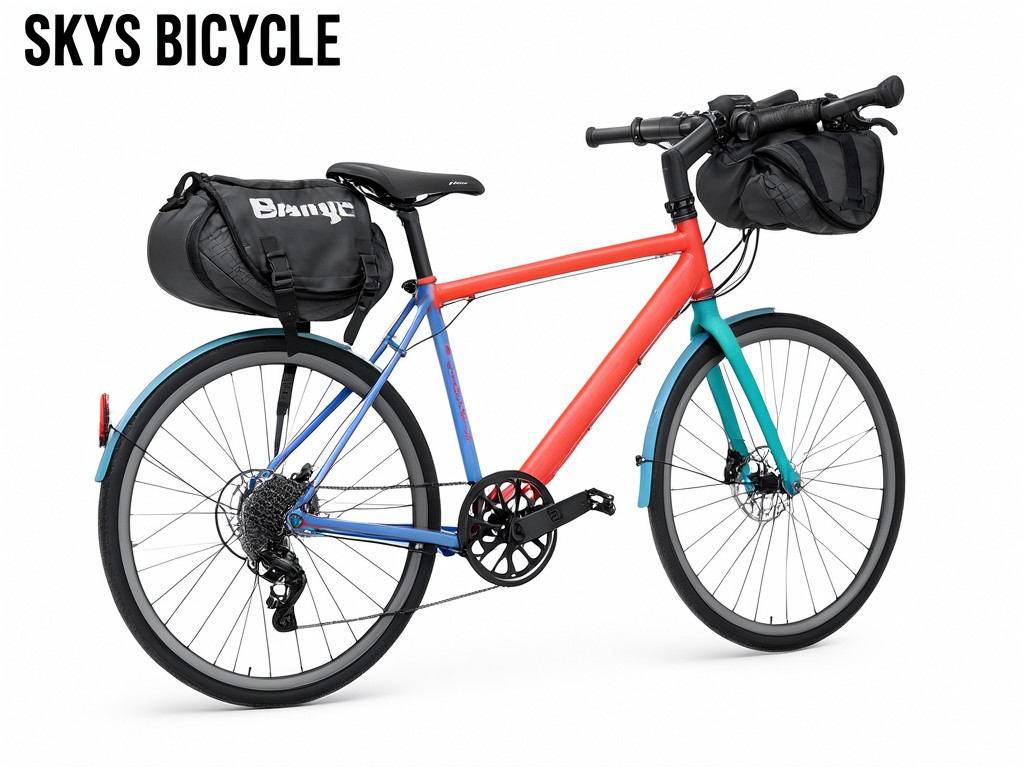
- A hydrostatic head number printed on a sample card does not prove seam sealing held after 40 km of rain.
- A strap that fits a 27.2 mm seat post may not clamp a 31.6 mm post without a different buckle geometry.
- Dropshipping packaging that omits individual polybags leads to abrasion marks on reflective trim before the unit reaches the end user.
What Can Be Customised and What Cannot
Customisation stops where the existing weld tooling begins.
Factory constraints
Logo placement, strap length and reflective strip position can be changed within the current tooling set without a new mould charge.
Customisable
- Logo placement and colour on the lower panel
- Strap length and buckle style within existing tooling
- Reflective strip position and width
- Poly bag and carton label language
Not customisable without new tooling
- Main panel width and seam geometry
- Welding bar size and seal width
- Zipper coil gauge and track width
- Internal stiffener shape
Changing the main panel width or the zipper coil gauge requires a new welding bar and a fresh sample approval, which adds lead time before a club launch.
Inspection Items and Test Methods
Seam integrity should be verified before the bags are packed, not after a retail complaint arrives.
A seam leak test at 1,500 mm hydrostatic head catches pinholes that a visual inspection misses, and zipper cycle testing at 200 open-close repetitions identifies coil gauge mismatches that cause slider separation under mud load.
Load testing at 15 kg static hold verifies the seat-post strap does not slip under rider weight, while 100 hours of UV exposure flags reflective trim that cracks at fold points.
Wash testing at 30 °C for ten cycles shows whether the coating delaminates after repeated cleaning.
Export Packaging and Handling Protection
Bulk shipments are packed flat to reduce volumetric weight, but creases along the welded seam can become crack points if the bag is folded the same way for months in storage.
Individual polybags prevent abrasion between reflective trim and nylon panels during transit, and cartons should include a moisture barrier if the route passes through high-humidity ports.
Storage and handling warning: keep bags flat or loosely rolled. Tight creasing along the weld line shortens coating life and invites seam cracking.
Setup, Use and Replacement Parts
Install the strap around the seat post and tighten until the bag sits level with no fore-aft play.
Do not overload beyond 0.5 kg; excess weight shifts the bag into the rear tyre on standing climbs and accelerates strap creep.
Clean with a damp cloth and mild soap; machine washing or harsh detergent attacks the coating and seam tape. Replacement straps and buckles are available as loose parts, but changing the main panel size requires new tooling and a fresh sample approval.
Request a tooling review and sample specification before the next production slot.
Contact us for tooling review