USD


Top Quality cycling wheelset and hub accessories b2b supplier: What Buyers Should Check Before Ordering
Moving from sample orders to container loads changes what a buyer checks on a wheelset and hub accessory programme. A rim that trues perfectly in a 10-piece sample can develop spoke tension drift across 500 units if hub flange drilling tolerances are not locked.
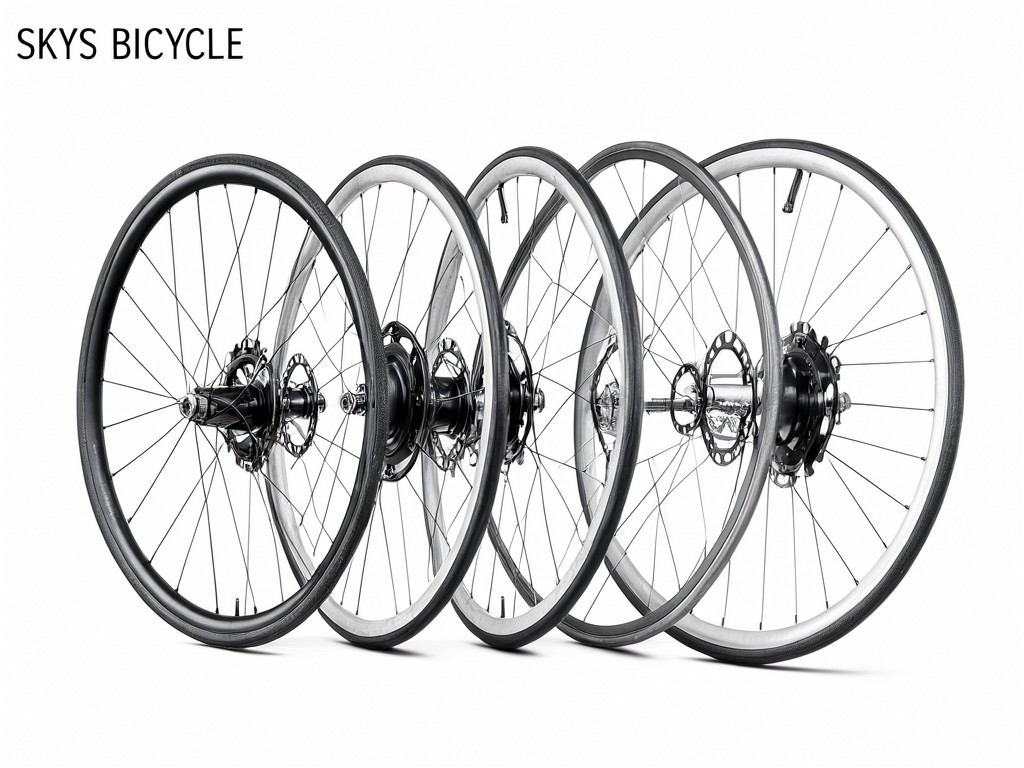
The difference between a profitable reorder and a warranty batch usually sits in rim weight tolerance, hub engagement consistency, and whether spoke nipple thread finish matches the rim eyelet corrosion coating. Buyers for private-label programmes should treat the wheelset as an assembled system, not a rim sold beside a hub. Spoke length depends on effective rim diameter, hub flange diameter, flange offset, and crossing pattern, so a change in any one dimension forces a recheck of the whole build sheet.
Size, Weight and Specification Range
| Component | Standard | Alternative | Compatibility note |
|---|---|---|---|
| Rim finish | Black anodized | UD carbon matte | Carbon rim brake wheels need carbon-specific brake pads |
| Hub shell finish | Black CNC machined | Silver polished | Anodized layer wears under frame dropout contact |
| Spoke finish | Stainless straight-pull | Bladed carbon-compatible | Bladed spokes need matching nipple driver |
| Rim tape | 18 mm clincher | 22 mm tubeless | Tubeless tape must seal spoke bed holes |
| Axle standard | 5 mm quick release | 12 mm thru-axle | Frame dropout width must match hub over-locknut dimension |
Rim diameter runs 700c for road and gravel, 650b for smaller frames and some gravel builds, and 29er for mountain applications. Internal width spans 19 mm for narrow road clinchers to 30 mm for gravel and cross-country use. Spoke count usually sits at 24 front and 28 rear for road, rising to 28 front and 32 rear for disc brake and e-bike builds where dish and torque loads are higher.
Hub over-locknut dimensions follow 100 mm front and 130 mm rear for quick release, or 142 mm and 148 mm for thru-axle frames.
Weight tolerance matters more than the nominal gram figure. A rim quoted at 420 grams can arrive at 440 grams if the alloy extrusion wall varies by a few tenths of a millimetre, and that 20-gram shift multiplies across two rims and changes the wheelset’s rotational inertia enough to feel different in acceleration. Buyers should ask for the weighed sample average and the standard deviation across a ten-piece lot, not just the lightest sample on the scale.
Comparing Two Standard Configurations
Alloy clincher, cartridge bearing
- 700c alloy rim, 19 mm internal width, black anodized
- 24 front and 28 rear straight-pull stainless spokes
- Sealed cartridge bearings with 5 mm quick-release axles
- Shimano HG road freehub body
- Fits road racing and club training programmes
Tubeless carbon, thru-axle
- 29er carbon rim, 30 mm internal width, UD matte finish
- 28 front and 32 rear bladed stainless spokes
- Cartridge bearings with extended seals, 12 x 142 mm front and 12 x 148 mm rear
- SRAM XD or Shimano Micro Spline freehub body
- Fits gravel and cross-country programmes
The alloy clincher build keeps rotational mass low and pairs well with rim-brake frames still in the club market, but the alloy brake track wears under sustained descents and needs pad checks. The carbon tubeless build carries more upfront cost, yet the wider internal rim supports lower tyre pressures and the thru-axle interface resists fork flex under disc brake torque. Buyers choosing between them are really choosing between wheel-building labour cost per season and frame compatibility.
Segment-Specific Requirements
Road racing programmes prioritise low rotational mass and lateral stiffness under sprint loads. Rim weights below 400 grams per wheel are common, and spoke tension is typically set between 90 and 110 kilogram-force to keep the rim true under cornering. The failure mode buyers report most is spoke nipple corrosion after winter salt exposure, so brass nipples with anti-seize coating outperform plain aluminium in wet climates.
Gravel and cross-country buyers need tubeless sealing and disc brake mounts that survive repeated wheel removal.
City and e-bike segments put the highest demand on hub flange strength and spoke gauge. A mid-drive motor applies torque through the hub shell and dropout, so 12 mm thru-axles and straight-pull spokes with 2.0 mm or thicker gauge are standard. Track programmes omit brake tracks entirely and use fixed-cog threading on the rear hub, which changes the freehub specification entirely. Each segment survives a different service condition: pothole impacts for gravel, brake heat for loaded touring, and corrosion for coastal city fleets.
OEM and ODM Programme Structure
During a private-label launch with a fixed ship date, the OEM structure determines whether the first container arrives in time for the season or misses it by eight weeks.
Branding options include rim decals, hub shell laser etching, and valve cap colour matching, but each adds a screen or pad-print setup that must be approved before batch production. Batch traceability is managed by rim lot number and hub production date, which matters when a warranty claim traces back to one extrusion run rather than the whole programme. Total cost of ownership here means comparing unit price against expected returns and warranty claims; a rim that saves two dollars per unit but generates a five percent spoke-breakage return rate costs more over two seasons than a tighter-tolerance rim at a higher price.
Sample approval usually requires one built wheel per configuration before tooling is released.
Custom rim profiles require new alloy extrusion dies or carbon moulds, which pushes lead time beyond standard catalogue builds. Standard hub bodies with customer-specific freehub bodies can be produced faster because only the freehub and axle kit change. Importers should lock the spoke length and ERD data with the factory before the sample stage, since changing the rim depth after spokes are cut creates scrap that the buyer ultimately pays for.
Capacity, Tooling and Scheduling
Spindle availability for rim drilling, spoke cutting and threading machines, and truing stand capacity set the daily output. A wheel-building cell typically laces and tensions 40 to 60 wheels per day per builder, so a 500-piece order occupies one cell for roughly two weeks excluding rim and hub lead time.
Carbon rim moulds and alloy extrusion dies carry their own lead time, separate from assembly scheduling.
Peak season scheduling runs from late winter through spring as brands build complete bikes for the summer market. Buyers should place tooling orders for custom decals or non-standard axle widths at least eight weeks before the required ship date. If the factory shares truing stands across road and mountain programmes, a sudden change in spoke count for one programme can delay the other by several days.
Packing, Marking and Freight Configuration
Wheels ship as bulky freight, so dimensional weight often exceeds actual weight and drives air and LCL cost more than the metal mass. Each wheel is wrapped with rim tape over the braking surface or bead seat, fitted with axle caps, and placed in an individual wheel bag before carton packing.
Cartons carry barcode labels, model codes, and date codes matched to the rim lot and hub production batch.
Export packaging needs corner protection, edge boards, and a moisture barrier for sea freight in humid climates. Marking must include spoke length and tension card details so the receiving warehouse or retailer can true the wheel without contacting the factory. Pallet configuration is limited by carton height; stacking double-stacked wheel boxes risks rim damage in the bottom layer unless edge protectors are used.
Setup, Use and Replacement Parts
On a club programme that reorders twice a season, maintenance intervals and spare-part compatibility determine how often wheels return to the shop for truing.
Spoke tension should be checked after the first 100 kilometres and again at 500 kilometres, because new spokes settle and nipples bed into the rim eyelets. Hub bearings need service when rotation feels gritty or axial play appears at the rim; sealed cartridge units are replaced rather than regreased in most retail service workflows. Replacement spokes must match the original ERD, flange diameter, and crossing pattern, so buyers should keep a spoke length chart by model rather than ordering by generic size.
Rim tape width must match the tyre system: 18 mm for clinchers, 22 mm or wider for tubeless.
Freehub bodies are not interchangeable across brands; a Shimano HG body will not accept an SRAM XD cassette, and Micro Spline needs its own spline pattern. Valve stems for tubeless rims require rubber grommets that seal against the rim bed, while Presta valves for clinchers rely on the rim hole diameter. Keeping spare valve cores, rim strips, and axle end caps in stock reduces the time a wheel sits off the bike waiting for a ten-cent part.
Questions Buyers Ask Before Ordering
What Rim ERD Should I Specify for My Spoke Length Calculation?
ERD is measured from the rim bed to the end of the spoke threads after tensioning, and it varies by rim depth and nipple type. Ask the factory for the measured ERD of the production rim, not the catalogue drawing.
Can I Mix Front and Rear Spoke Counts in One MOQ?
Yes, but the MOQ applies to the complete wheelset pair, so a front-only or rear-only change requires a separate production run or a higher per-unit setup cost.
Which Freehub Body Fits My Customers’ Cassettes?
It depends on the cassette brand and speed. Shimano HG covers most road and mountain cassettes, SRAM XD fits 11- and 12-speed mountain cassettes, and Micro Spline is required for SRAM 12-speed mountain. Confirm the cassette range before locking the hub specification.
How Are Hubs Marked for Batch Traceability?
Each hub receives a laser or ink date code tied to the production shift, and the rim carries a lot number sticker inside the bed. This lets a warranty claim be traced to a specific extrusion or bearing batch rather than the whole order.
What Is the Lead Time for Custom Rim Decals Versus Standard Black Anodized?
Standard black anodized rims move through existing stock, while custom decals add screen setup and a colour approval sample, typically adding one to two weeks before mass production.
Ready to discuss your wheelset and hub accessory programme?