USD


Bespoke bicycle hydraulic disc brake accessories distributor: Specification, Ordering and Quality Notes
A bicycle brand or retail buyer sourcing bespoke hydraulic disc brake accessories is not buying a commodity. Hose barb matches, lever master-cylinder bore, banjo angle, and fluid compatibility all determine whether a build reaches the shop floor or comes back as a warranty claim. This note covers the specification points, material trade-offs, and volume mechanics a distributor must hold across each lot.
Design Constraints Behind the Specification
| Specification point | Standard catalogue item | Bespoke or made-to-order | Effect on unit cost and service life |
|---|---|---|---|
| Minimum order quantity per SKU | 100 units | 500 units | Lower MOQ raises per-unit freight and handling share |
| Lead time ex-works | 14-21 days | 35-50 days | Bespoke colour or lever blade machining adds tooling setup |
| Hose length tolerance | ±2 mm | ±1 mm | Tighter tolerance suits frame routing with fixed bosses |
| Barb and olive set tolerance | ±0.03 mm | ±0.01 mm | Closer fit reduces seepage under lever load |
| Anodized colour drift across a lot | Visible match to master sample | Tighter batch control required | Mismatched lever and caliper colour triggers returns |
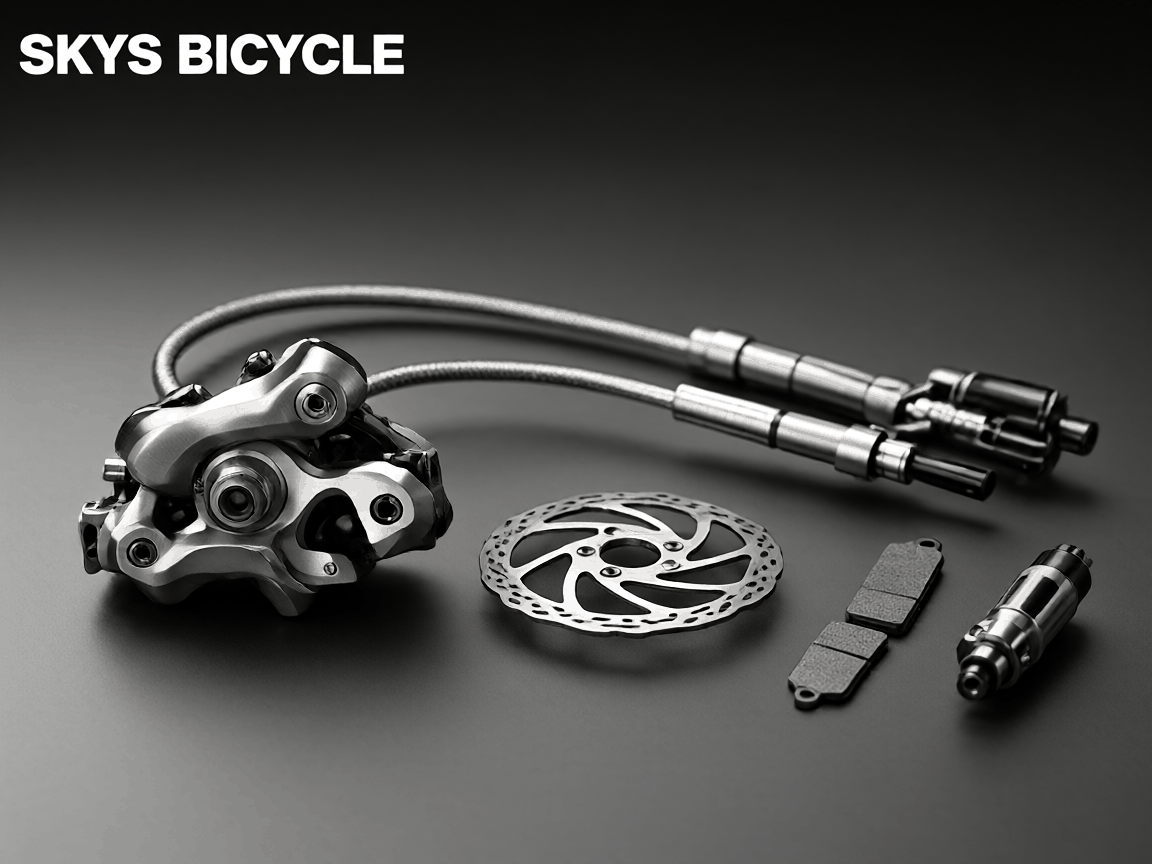
Before comparing quotations, confirm that the distributor holds the same barb and olive compression spec across the batch. A 0.03 mm drift in hose barb diameter shows up as fluid seepage during a bleed cycle or under sustained lever load, and the cost of a single field failure wipes out the price gap between two quotes. Lever blade pivot bore, banjo fitting angle, and reservoir cap thread pitch are the dimensions most often missed in a first sample approval.
Materials and Construction Trade-offs
Braided hose with a PTFE liner resists expansion under lever pull better than a plain rubber hose, which means less lever travel and a firmer feel at the caliper. Stainless-steel fittings add weight but survive repeated disassembly at service intervals; aluminum fittings save 15-25 g per corner but strip threads if a mechanic over-torques the banjo bolt. Mineral oil and DOT fluid are not interchangeable, and a distributor who mixes them across a batch will see seal swell and piston stick within weeks.
The lever master-cylinder bore must match the caliper piston volume. A mismatched pair gives either a spongy lever or insufficient pad clearance, and neither defect is visible in a static product photo. Anodized finishes on lever blades and reservoir caps show batch colour drift faster than raw machining, so a brand building bikes in mixed frame colours needs a signed-off master sample before the first production lot.
Option Comparison by Usage Level
Service and replacement stock
Kept for bike shops and warranty departments. Hoses are cut and crimped to common lengths, and fittings use standard M10 x 1 banjo threads. MOQ stays low, but the buyer accepts a broader length tolerance and a single fluid specification per SKU.
- Standard barb and olive sets only
- ±2 mm hose length tolerance
- One bleed kit per 50 hose assemblies
Bike brand OEM specification
Built to a frame builder's lever reach, hose routing, and colour code. Custom banjo angles and machined lever blades require tooling, so MOQ moves to 500 units per SKU and lead time extends to five to seven weeks. The trade-off is a cleaner assembly line and fewer returns from mismatched parts.
- Custom banjo angle and lever blade machining
- ±1 mm hose length tolerance
- Batch colour match to frame paint
Buying Mistakes That Lead to Returns
Two suppliers quoting the same specification can still deliver different failure rates if the buyer does not specify the barb-and-olive pairing for each hose batch. A mismatched olive compresses unevenly and leaks at the first pressure spike. The second common error is ordering flat-mount caliper adapters for a post-mount frame, which forces the mechanic to file the mount and voids the caliper warranty. The third is mixing mineral-oil seals with DOT fluid in the same warehouse bin; cross-contamination shows up as seized pistons after the first service interval.
Unit price and service life diverge when a buyer accepts a lever blade with a rough pivot bore. The bore drag shows up after a few hundred actuations as a slow lever return, and the shop receives a comeback long after the margin on the sale has disappeared.
Quality Control and Batch Consistency
A distributor's reputation rests on lot-to-lot consistency. Hose inner diameter, anodize thickness, and lever blade weight must stay inside a narrow band or the finished bike feels different from one unit to the next. A 5 g swing in lever blade weight is imperceptible on a scale but changes the balance of a brake lever assembly enough that a professional mechanic notices during setup.
Compatibility warning: do not cross-reference a brake lever from one system with a caliper from another unless the master-cylinder bore and piston volume are confirmed in writing. Mismatched volumes cause either lever bottom-out or pad drag, and neither fault appears in a visual inspection.
Batch acceptance: check three random units per lot for barb concentricity and anodize colour against the approved master sample.
Volume Planning and Lead Time
Lead time splits into two bands. Stocked catalogue accessories ship in two to three weeks ex-works, while bespoke hose assemblies and machined lever blades run five to seven weeks because of tooling setup and first-article inspection. A retail buyer should order service stock at the start of a season and align bespoke OEM orders with the frame production calendar, not the sale date.
Freight configuration matters more than the unit price at low volume. A carton of 100 hose assemblies weighs roughly 8-12 kg depending on fittings, and air freight doubles the landed cost versus sea freight. Consolidating a full pallet of mixed SKUs brings the per-unit freight down, but only if the distributor can hold the batch consistency tolerances across the whole pallet.
Specification review
Send your bill of materials, hose length schedule, and lever/caliper pairing for a quotation and lead-time check.
Request specification review