USD


Buy high performance road cycling accessories and components exporter: Specification, Ordering and Quality Notes
Design Constraints Behind the Specification
When a brand extends an existing range, the first cost driver is tolerance stack-up across touching parts: rim bead seat diameter to tire bead, hub flange spacing to chainline, bottom bracket shell width to crank spindle, and cable housing bend radius to lever pull.
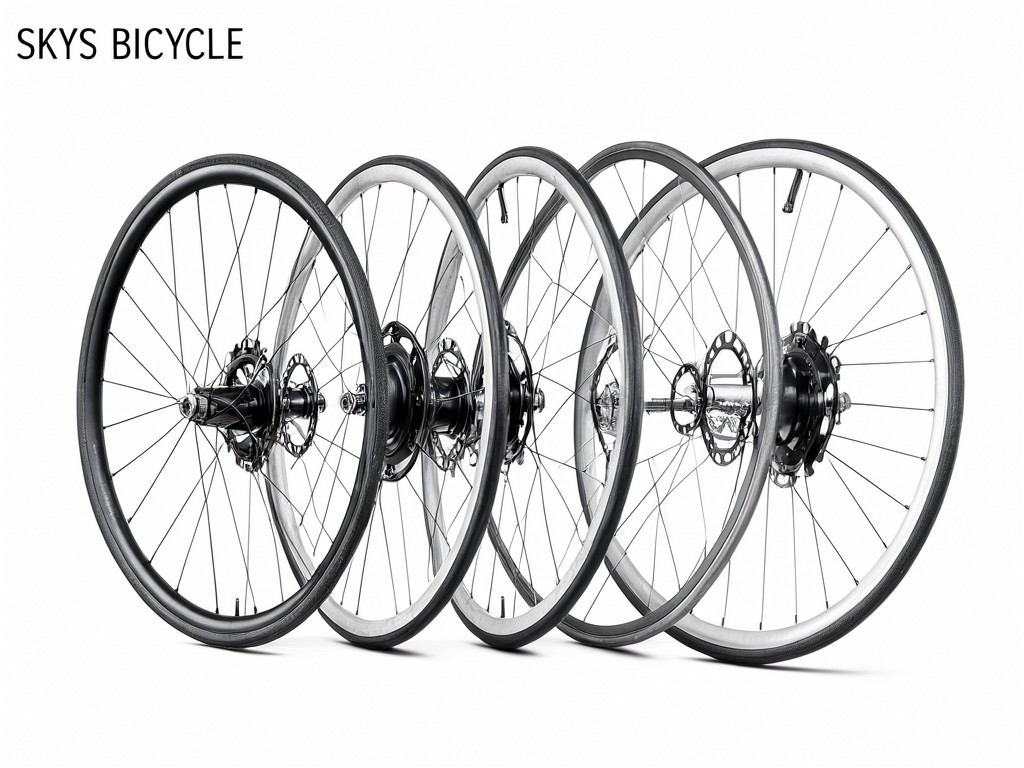
Road components are judged on gram tolerances, spoke tension consistency, and braking surface flatness. A rim sidewall that varies 0.15 mm in thickness creates uneven brake pad wear and pad knock-back under cornering loads. Hub bearings that lose preload after 500 km produce play riders feel as indexing shudder. Cable liners with high friction add 0.5 to 1.0 mm of lever travel per shift, which buyers report as missed shifts on climbs. The factory checks radial runout under 0.4 mm, lateral runout under 0.3 mm, and spoke tension within 5% across a wheel build before batch release.
Material Options and Their Trade-offs
Carbon fiber prepreg removes mass but fails by delamination at impact points. 6061 aluminum dents predictably and resists corrosion better than 7075 in salt spray, though 7075 offers higher yield strength for crank arms and chainrings. Stainless steel spokes resist nipple corrosion but add 20 to 40 g per wheel against bladed steel. Ceramic bearings lower drag by roughly 0.3 to 0.6 watts per hub but require sealed cartridges and fail abruptly once the seal breaches. Butyl tubes hold pressure for weeks yet add rolling resistance; latex loses 5 to 8 psi per 24 hours despite saving 3 to 5 watts at 40 km/h.
If the build targets rim-brake wheels for alpine descents, specify carbon layups with a glass-transition temperature above the rim brake track heat soak; otherwise the resin softens and the sidewall deforms under pad load.
Where This Product Beats Standard Alternatives
Standard import components show batch weight drift up to 8 g per part, anodizing that fades after six weeks of UV exposure, brake pads that contaminate with alloy dust, and no batch traceability on the carton.
High performance export spec holds weight tolerance within ±2 g per unit, uses UV-stable clear coat, matches pad compound to rim surface, prints a batch code on every carton, and retains first-article inspection records for 12 months.
Option Comparison by Usage Level
Select by usage level before requesting a quote.
- Club and training use (aluminum rims, sealed steel bearings, butyl tubes) – specify ±5 g weight tolerance and a 12-month warranty.
- Rim brake: double-wall 6061, machined brake track.
- Disc brake: 6-bolt or center-lock hub, 12×100 / 142 mm thru-axle.
- Competitive and gran-fondo (carbon rims, ceramic hub bearings, latex tubes) – specify ±2 g tolerance, runout under 0.3 mm, brake track flatness within 0.1 mm.
- Shimano / SRAM 11 / 12-speed freehub compatibility.
- Press-fit or threaded bottom bracket per frame shell.
- OEM private-label launch (mixed carbon / aluminum kit, custom decals, retail carton marking) – specify first-article approval, batch traceability, and MOQ aligned to container load.
- Lead time 35 to 45 days after sample sign-off.
- FOB packing with corner protectors and inner boxes.
How to Choose Before Requesting a Quote
Moving from sample orders to container loads changes the cost structure: sample air freight runs 3 to 5 times the per-unit cost of sea freight, while a missed launch date costs more in lost retail placement than the unit price saves.
During a private-label launch with a fixed ship date, quote accuracy depends on specifying the finish, bolt circle diameter, axle length, and valve length up front. Changing spoke length after tooling is ordered adds 10 to 14 days and a new die cost. Inspection level (AQL 1.0 vs 2.5) changes sample size and rejection rate; tighter AQL lowers field returns but raises unit price by roughly 3 to 6%.
| Item | MOQ | Lead time (days) | Notes |
|---|---|---|---|
| Sample order | 1-5 pcs | 10-15 | Ex-works |
| Production batch | 100 pcs | 25-35 | FOB |
| Container load | 500 pcs | 35-50 | Palletized |
Segment-Specific Requirements
Retail buyers need shelf-ready cartons with barcode labels and bilingual manuals.
- Clamshell or box packaging, UV-stable graphics, 24-piece master carton.
- Pantone-matched decals, serial-numbered batch cards, 12-month replacement warranty.
- Drawing approval, tooling review, PPM defect target under 15,000.
Brand product managers need color-matched decals and a spec sheet that matches the web listing within 2 g. OEM buyers need CAD files, first-article reports, and a change-notice clause before running order two.
Packing, Marking and Freight Configuration
Corner impacts on rim boxes, spoke nipple abrasion in mixed cartons, and moisture ingress on steel parts define the container-load damage profile. Use corner protectors, individual wheel bags, and desiccant packets. Mark each carton with batch code, gross weight, and handling symbols. Pallet configuration should keep total height under 1.2 m for sea freight and under 1.6 m for air, with shrink-wrap securing the load to the pallet.
Care, Storage and Service Life
Store components at 15 to 25 °C and below 60% relative humidity to prevent galvanic corrosion between aluminum and steel. Clean brake tracks with isopropyl alcohol; avoid petroleum solvents on carbon clear coat. Service hub bearings every 3,000 to 5,000 km or after immersion in water; replace cables and housing when shift effort rises above 2.5 kg.
- Wipe down after wet rides to remove salt and road grit.
- Check spoke tension monthly during high-mileage blocks.
- Replace brake pads when compound thickness reaches 1.0 mm.
- Inspect carbon for impact cracks before every race day.
Request a tooling-review and batch-consistency quote
Contact us