USD


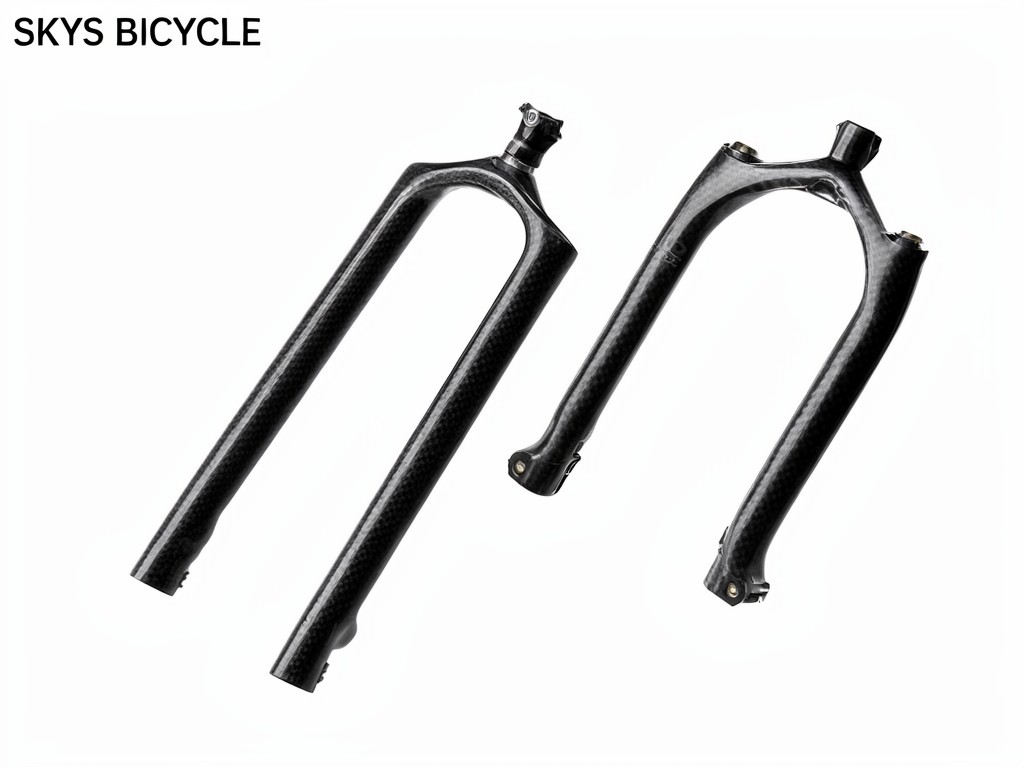
Specifying ISO Certified carbon fiber bicycle fork components china factory for Wholesale and OEM Orders
Carbon fiber fork components are specified by interface, not by appearance. A buyer purchasing for wholesale or OEM programs needs consistent axle-to-crown length, steerer perpendicularity, and brake mount flatness across every batch, because a half-millimeter error at the crown forces a stem spacer stack or a brake caliper shim on the assembly line.
Where Cheaper Alternatives Fall Short
The complaint that repeats across reorders is a cracked crown or a steerer tube that separates from the blades after a few thousand kilometers. Low-cost carbon forks often use resin-rich layups with voids trapped at the crown-blade junction. Under braking load, those voids become crack initiation points, and the fork fails where the rider cannot see it until the steerer moves independently of the blades.
Cheaper tooling also produces left-right weight drift of 20 g or more between blades, which shifts handling feel and triggers warranty claims when a shop builds two bikes from the same batch and the customer notices the difference. Brake mounts machined after molding can sit out of square by a fraction of a degree, causing caliper rub or uneven pad wear. When a fork fails in the field, the cost is not the replacement unit; it is the freight, the labor, and the lost retail confidence.
How It Is Built and What That Changes
Production starts with T700 or T800 carbon prepreg cut to a ply pattern that matches the fork size. The material is wrapped around a steel mandrel, an internal bladder is inflated to press the plies against the mold wall, and the assembly cures in a heated press. Alloy inserts for the crown race and dropouts are co-molded during the cycle, then the steerer is faced and the brake mounts are machined to flatness.
The process difference shows up in the tolerance stack. A bladder-molded fork holds axle-to-crown length within ±3 mm and steerer perpendicularity within 0.5 degrees across a production run. Void content stays below 2 percent when the cure profile is logged per batch. Weight variation between left and right blades drops to under 5 grams, which matters for OEM assembly lines building matched pairs.
Finish is a clear coat over the carbon weave or a solid paint layer. Both add roughly 15 to 25 grams per fork, but paint hides surface porosity better than clear coat.
How to Choose Before Requesting a Quote
Quote requests stall when the buyer sends only a photo and a target price. A fork is defined by its interfaces, so the specification stage should start with the bike geometry and the brake standard, then move to the layup grade and the finish.
- Wheel size and bike type
- 700c road or gravel → axle-to-crown typically 370–400 mm, offset 45–55 mm
- 27.5 in or 29 in MTB → axle-to-crown 420–500 mm, offset 40–55 mm depending on travel
- Brake mounting standard
- Post mount → accepts 160 mm or 180 mm rotor with direct caliper bolt
- Flat mount → road and gravel calipers, lower stack height, requires adapter for larger rotors
- Steerer diameter
- 1-1/8 in straight → traditional headsets, lower cost tooling
- Tapered 1.5 in lower / 1-1/8 in upper → stiffer front end, common on modern frames
- Dropout and axle
- Quick release 9 mm → older road and commuter frames
- Thru-axle 12 x 100 mm front → disc road and gravel
- Thru-axle 15 x 110 mm → MTB boost spacing
- Carbon grade
- T700 → baseline stiffness and impact tolerance, higher MOQ flexibility
- T800 → 10–15 percent lighter for the same stiffness, longer cure cycle and higher price
Each node changes the tooling cost and the minimum order quantity. A tapered steerer with thru-axle dropouts needs a separate mold from a straight steerer with quick-release slots, so the factory will quote a new tooling charge if the configuration shifts after the first sample approval.
Who Uses It and Where It Matters
OEM bike brands order fork components to match frame production cycles. They need batch-to-batch consistency because the assembly line expects the same stack height and brake mount position on every unit. A variation in crown race seat diameter forces the headset press to be recalibrated, which stops the line.
Private-label buyers use the same fork under their own brand name, often with a custom paint finish and a logo decal. Their risk is not structural failure alone; it is a finish that chips during shipping or a decal that wrinkles after one season of sweat and UV exposure. Distributors supplying bike shops and repair networks care about replacement part interchangeability: a fork sold as a spare must fit the same frame models it replaces.
Requirements by Buyer Segment
Buyer segment changes the paperwork and the inspection level. An OEM purchase order usually includes a first-article inspection report and a batch certificate, while a private-label order adds artwork approval and a color swatch sign-off before the mold is painted.
| Customization Option | Standard Specification | Custom Range | MOQ Impact | Lead Time Impact |
|---|---|---|---|---|
| Steerer diameter | 1-1/8 in straight | Tapered 1.5 in lower | New crown mold | +2–3 weeks |
| Axle-to-crown length | 385 mm (700c road) | 350–450 mm | Blade length retool | +1–2 weeks |
| Rake / offset | 45 mm | 35–55 mm | Blade mold change | +1 week |
| Brake mount | Post mount, 160 mm | Flat mount, 140–180 mm | Machining program change | +3–5 days |
| Dropout type | Quick release 9 mm | Thru-axle 12 x 100 mm | Dropout insert mold | +2 weeks |
| Finish | Clear coat over weave | Solid paint, custom Pantone | Paint line setup | +1 week |
| Carbon grade | T700 | T800 | Prepreg source change | +1–2 weeks |
| Weight target | 380 g ±15 g | 320–420 g | Layup redesign | +1 week |
Distributors typically order from existing tooling to avoid the mold charge, accepting the standard specification in exchange for shorter lead time. OEM and private-label buyers pay for the mold and the first-article inspection, but they receive a configuration that matches their frame geometry and branding without post-production adapters.
Keeping Repeat Orders Supplied
Batch traceability starts at the mold. Each production lot records the prepreg roll number, cure temperature, press cycle time, and the inspector who signed off the dimensional sample. When a reorder arrives six months later, the factory can pull that record and confirm the same layup schedule was used.
Safety stock protects against press downtime and resin shelf life. Carbon prepreg has a finite out-time at room temperature, so a factory that keeps frozen prepreg inventory can schedule repeat runs without waiting for material re-qualification. Sample approval before each purchase order remains the cheapest way to catch a drift in offset or steerer diameter before the full container is packed.
Packing, Marking and Freight Configuration
Cardboard master cartons hold two forks each, separated by plastic fork protectors that cover the dropouts and the steerer crown. Cartons are marked with the part number, batch code, PO number, and a QR code linking to the inspection report. Pallets are wrapped and strapped to prevent the fork crowns from shifting during ocean freight.
Care, Storage and Service Life
Store forks flat or hung by the dropouts, never by the steerer tube, and keep them away from direct sunlight and solvent cleaners. UV degrades the clear coat over time, and contact with brake fluid or strong degreaser can attack the resin matrix at the brake mount face.
Service life is measured in impact events, not just kilometers. A fork that has absorbed a curb strike or a front-wheel lockup should be removed from service and inspected with a tap test or ultrasound for internal delamination. Stem and brake mount torque must stay within the manufacturer’s printed limit; over-torquing the steerer clamp is a common cause of carbon crushing at the top of the steerer.
Review Your Artwork and Branding Before Production
Send your logo file, Pantone reference, and placement drawing for a pre-production mock-up. The factory checks decal size against the crown and blade surface area before the paint line is scheduled.
Request artwork and branding review